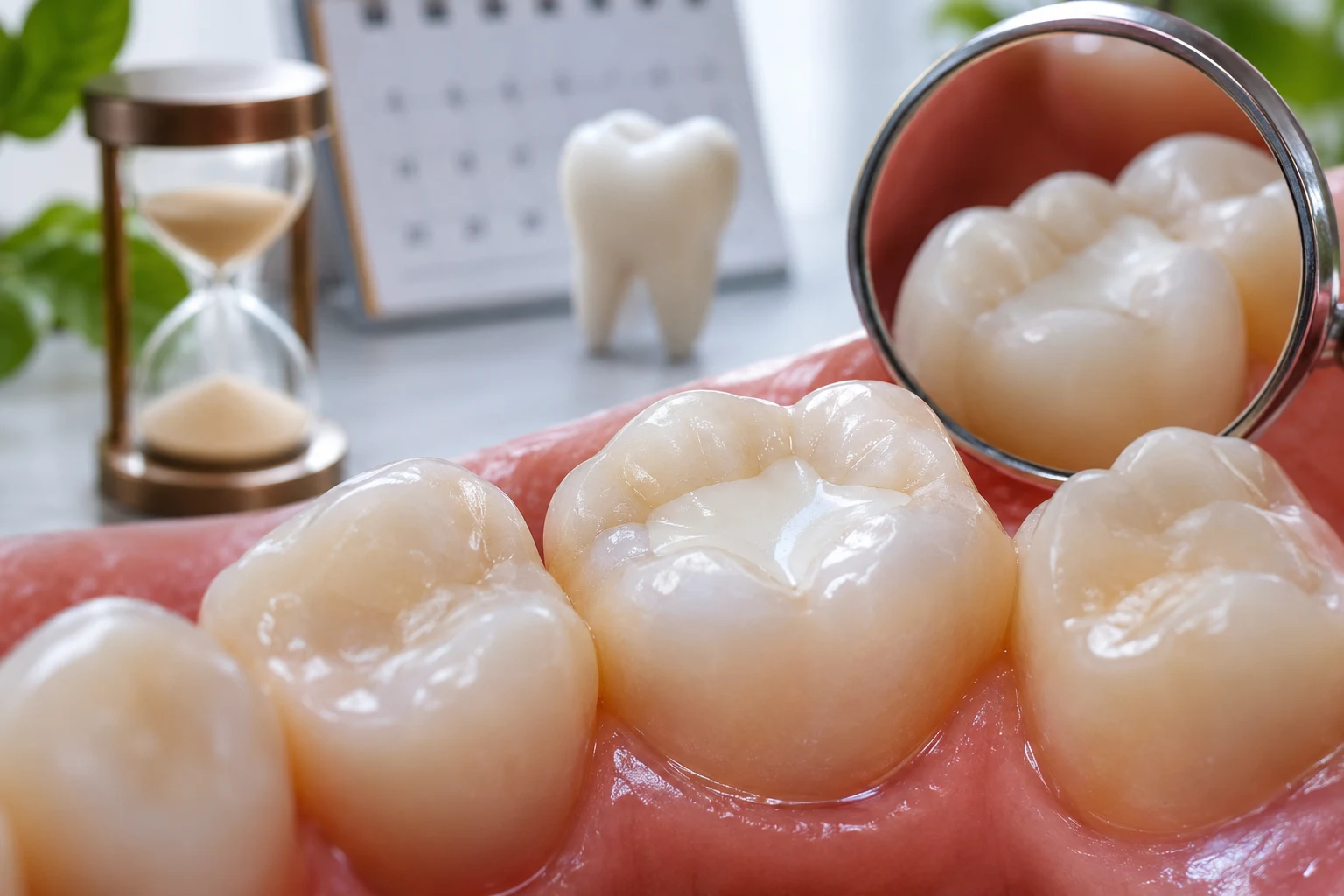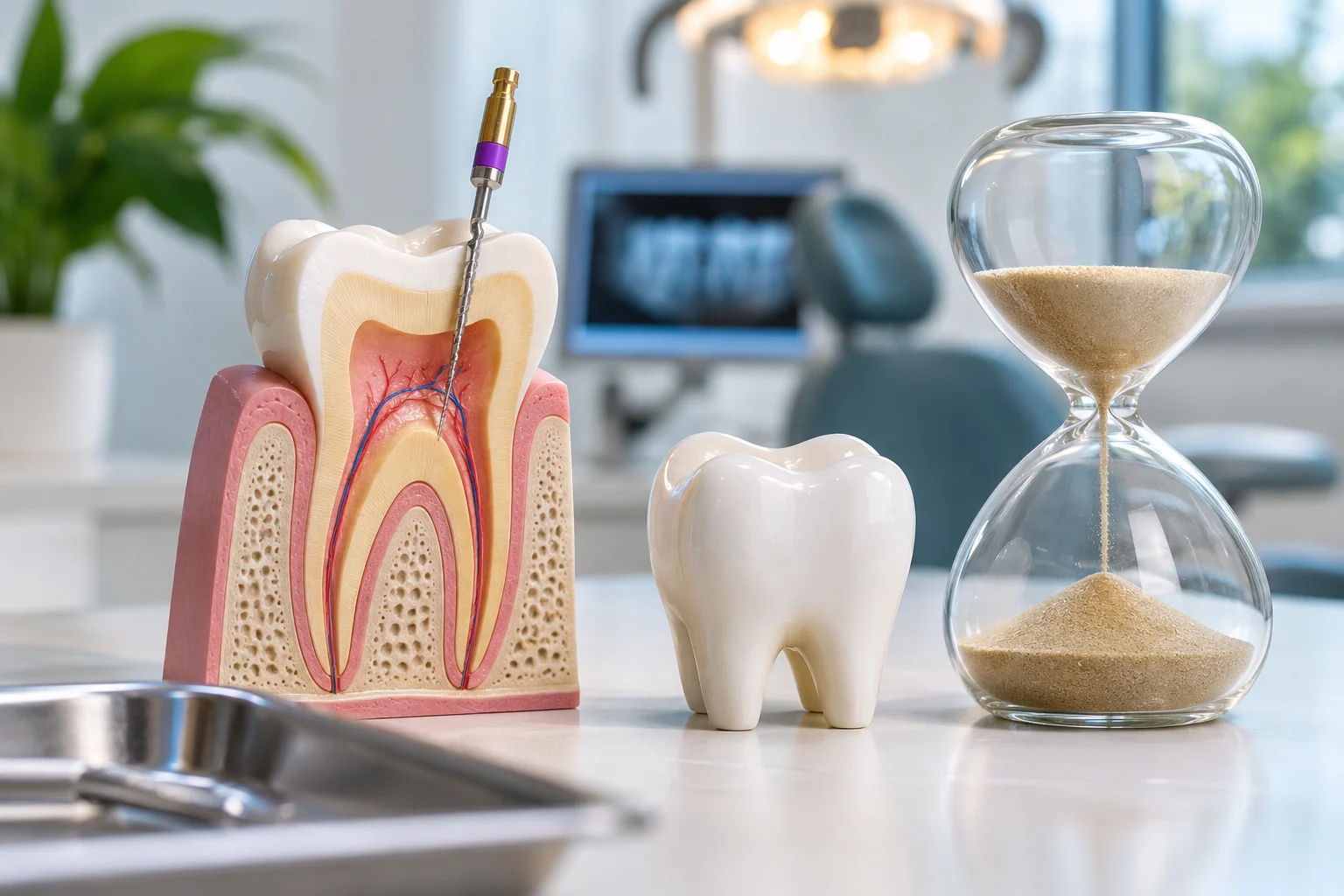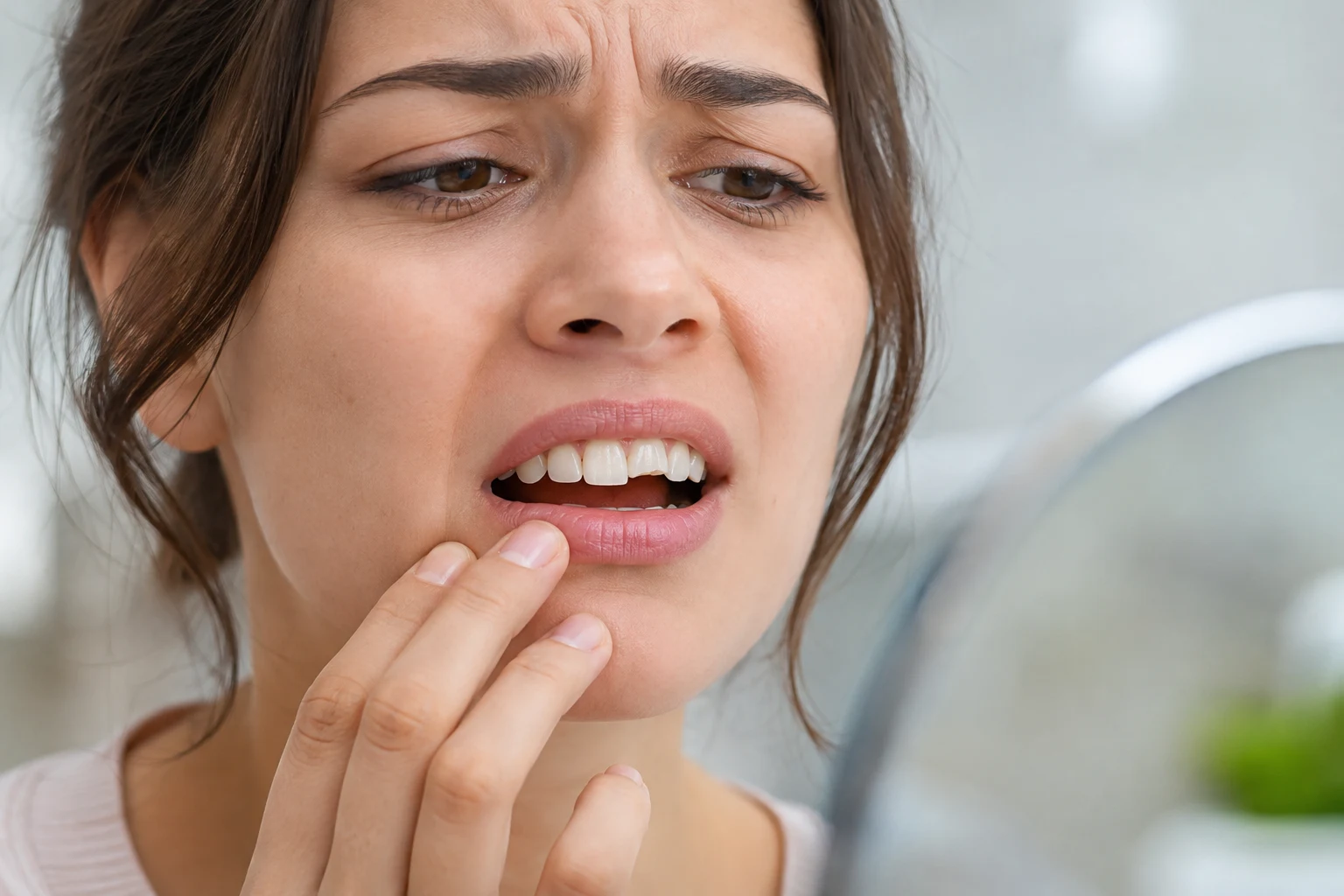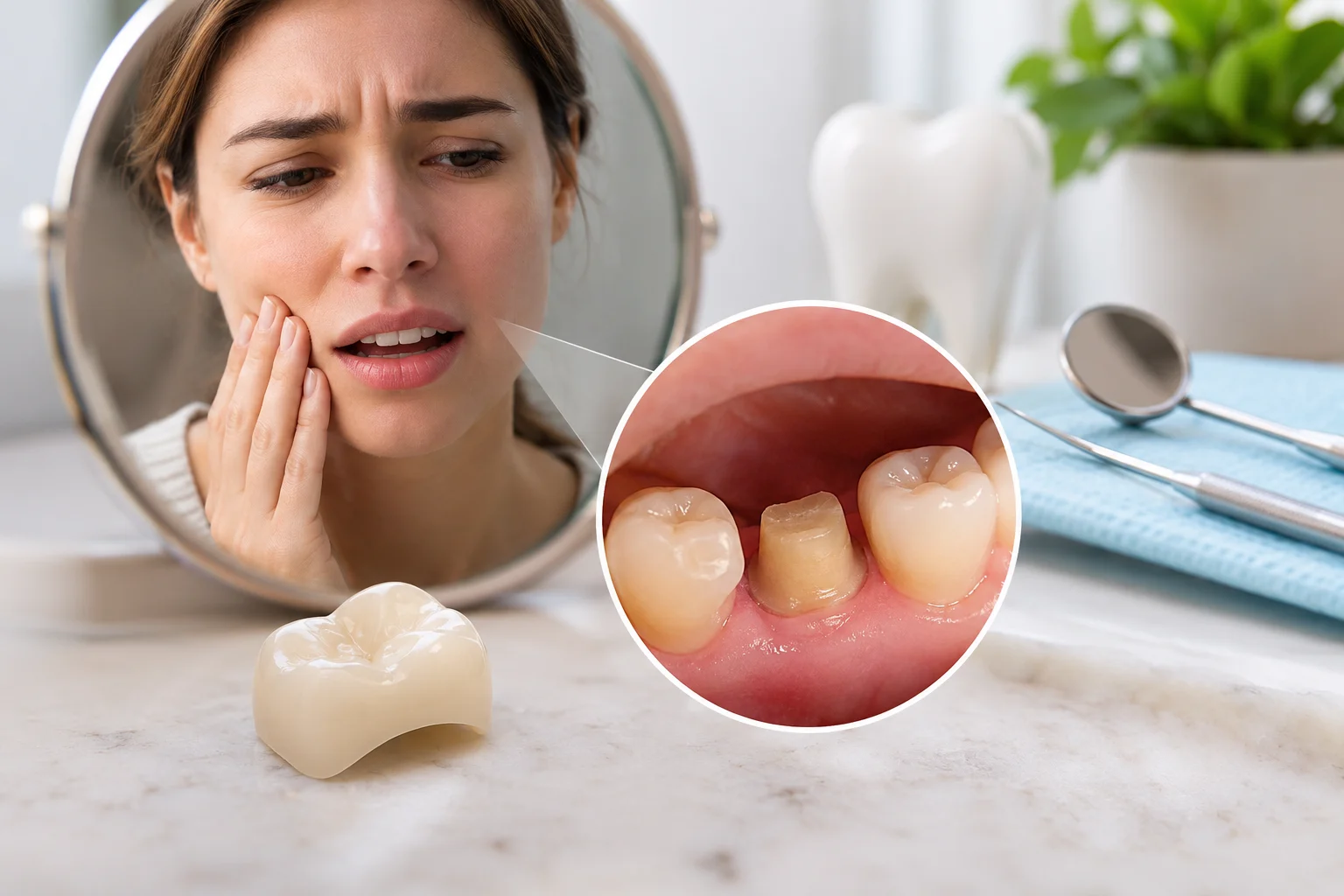


Keep the crown, do not try to glue it back, and call your dentist as soon as you can. That is the short answer. A crown coming off feels alarming, especially if it happens mid meal, but it is a common problem and usually a fixable one. The sooner the tooth is looked at, the simpler the fix tends to be.
Here is a calm, practical guide to what to do in the first hour, what to avoid, and what happens when you come to see us.
What a lost crown leaves behind
A dental crown is a cap that sits over a tooth to protect it, and it is held in place with dental cement. When the crown comes off, two things are exposed: the crown itself, and the prepared tooth underneath. The tooth underneath is usually smaller and rougher than a natural tooth, and it can be sensitive, sharp or fragile.
It is not always painful. Plenty of people feel little more than a strange gap and a rough edge under the tongue. But a lack of pain does not mean the tooth is safe, because it has lost its protection.
Seven steps to take straight away
- Find the crown and keep it safe. Rinse it gently under water without scrubbing, and store it in a clean container or small bag. Check inside it. If it still holds a piece of tooth or old cement, tell your dentist, because that tells us how it came off.
- Look at the tooth. You will probably see a stump that feels rough. If it is cracked or a piece has broken away, mention that when you call.
- Keep the area clean. Brush gently around it with fluoride toothpaste as normal, and rinse with warm salted water if the gum is sore.
- Protect it from your bite. Chew on the other side and avoid anything hard, crunchy or sticky.
- Ease sensitivity. NHS advice suggests using a sensitive toothpaste, dabbed directly onto the tooth with a clean finger. Very hot and very cold food and drinks may be uncomfortable for a day or two.
- Cover sharp edges if needed. A little dental wax, available from pharmacies, can stop a rough edge from catching your tongue or cheek.
- Call us. Do it the same day if you can, even if nothing hurts.
Some pharmacies sell temporary dental cement. If you choose to use one, follow the packet instructions carefully and treat it as a stopgap only. We would rather you called us first, so we can tell you whether it makes sense for your tooth.
If you have swallowed the crown, it usually passes through without causing harm. Let us know anyway. If you have trouble swallowing or breathing, or you develop pain in your chest or stomach, call NHS 111 or go to A&E.
Mistakes that make it harder to fix
- Do not use superglue or any household adhesive. It can damage the tooth, trap bacteria underneath and make it harder to fit a crown properly later.
- Do not force the crown back on. If it does not slip into place easily, leave it. Pressing it on can break the tooth.
- Do not wear it loose. A crown that moves lets food and bacteria in and can slip down your throat.
- Do not wait weeks. The tooth can drift, decay or crack while it is exposed, and then the crown no longer fits.
- Do not poke at the tooth with a toothpick or fingernail.
How urgent is a crown that has come off?
It depends. A lost crown on its own, without pain, is rarely life threatening, but it is worth treating as urgent. The exposed tooth is vulnerable to infection, sensitivity and fracture, and the longer it is left, the more can go wrong. Many dentists advise being seen within a day or two, and sooner is better.
Call us the same day if you have:
- Pain that does not settle with the usual over the counter painkillers, taken as directed on the pack
- Swelling in the gum, jaw or face
- A tooth that has broken as well as the crown coming off
- A bad taste or discharge from around the tooth
A broken crown is one of the problems we see as an emergency at Meliora Dental. You can read how it works on our emergency appointment page, and we keep same day slots, including on Saturdays. If you have a high temperature, swelling that spreads, or trouble breathing or swallowing, go to A&E or call 111.
How we deal with it at Meliora Dental
We look at the crown and the tooth together, and take an X ray if we need to see what is going on under the gum or inside the tooth. Then there are three main routes.
The crown can be put back
If the crown is intact, still fits well and the tooth underneath is healthy, we clean off the old cement, check the fit and cement it back into place. This is often done in one visit.
The crown needs replacing
If the crown is cracked, worn or no longer fits, or the tooth has changed shape, we will make a new one. We take digital impressions rather than the old putty trays, and a crown is typically completed over two visits, with a temporary crown to protect the tooth in between. You can read more about how we make them on our crowns and bridges page.
The tooth needs treatment first
Sometimes the reason a crown came off is that decay has crept in underneath it or the tooth has cracked. In that case we deal with the problem first, perhaps with a filling, a build up of the tooth or root canal treatment, before a crown goes back on. It is better to find this out now than to cement over a problem.
The usual reasons a crown loosens
Understanding the cause makes a repeat much less likely.
- Worn cement. The cement that holds a crown can weaken slowly over many years.
- Decay underneath. A crown cannot decay itself, but the tooth under it can, particularly at the edge where it meets the gum. Decay loosens the grip.
- Biting something hard or sticky. Boiled sweets, toffee, ice and sudden knocks are common culprits.
- Grinding or clenching. Constant pressure, often at night, can work a crown loose. Our article on teeth grinding and tooth wear explains the signs and the treatment.
- Changes to the tooth. Gum recession can expose the edge of a crown, and a tooth that has had root canal treatment can change over time.
- An ageing or poorly fitting crown. Crowns commonly last ten years or more with good care, but they do not last forever.
If you want to know why a crown was suggested in the first place, our guide on why crowns are recommended covers the common reasons.
When a temporary crown is the one that came off
Temporary crowns are held on with a weaker cement on purpose, so they can be removed when your permanent one is ready. They come off more often than permanent ones, particularly with sticky food. If yours falls off, keep it, avoid chewing on that side, and call us. The exposed tooth is delicate and can be sensitive, and we will usually want to refit the temporary or bring your appointment forward.
Keeping your crowns secure for the long run
- Brush twice a day and clean between your teeth, including around the edge of the crown.
- Go easy on very sticky and very hard foods.
- Get a night guard if you grind your teeth.
- Do not use your teeth as tools.
- Keep up your regular check ups so we can spot a loosening crown or decay underneath before it comes off.
If you notice any sensitivity around a crowned tooth, a taste or a rough edge, it is worth checking what is causing the sensitivity before it turns into a bigger job.
Need to be seen? Contact Meliora Dental
Whether it is a crown that came off in the middle of dinner or a temporary one that did not last, we can see you quickly and sort it out. If a natural tooth has chipped as well, our guide to a chipped or broken tooth explains what to do next.
Call 0113 249 0795, or email reception@melioradental.co.uk. We are at 313A Roundhay Road, Harehills, Leeds LS8 4HT.
Lost crown: your questions answered
Can a crown that has fallen off be put back on?
Often, yes. If the crown is undamaged, fits well and the tooth underneath is healthy, we can clean it and cement it back. If the tooth has decayed or the crown is damaged, a new one may be needed.
How long can I wait to see a dentist?
As soon as you can. Many dentists advise being seen within a day or two, and sooner if you are in pain, have swelling, or the tooth has broken. The exposed tooth can decay, crack or shift while it is unprotected.
Is it painful when a crown falls off?
Not always. Some people feel nothing, others feel sensitivity to hot, cold or air. Pain, swelling or a bad taste are signs to call us the same day.
Can I eat normally in the meantime?
Eat soft food and chew on the other side. Avoid anything hard, crunchy or sticky, and be careful with very hot or cold drinks.
Will I need a new crown?
Not necessarily. If the crown is intact and the tooth is sound, recementing it may be enough. We will examine both and explain the options before we do anything.