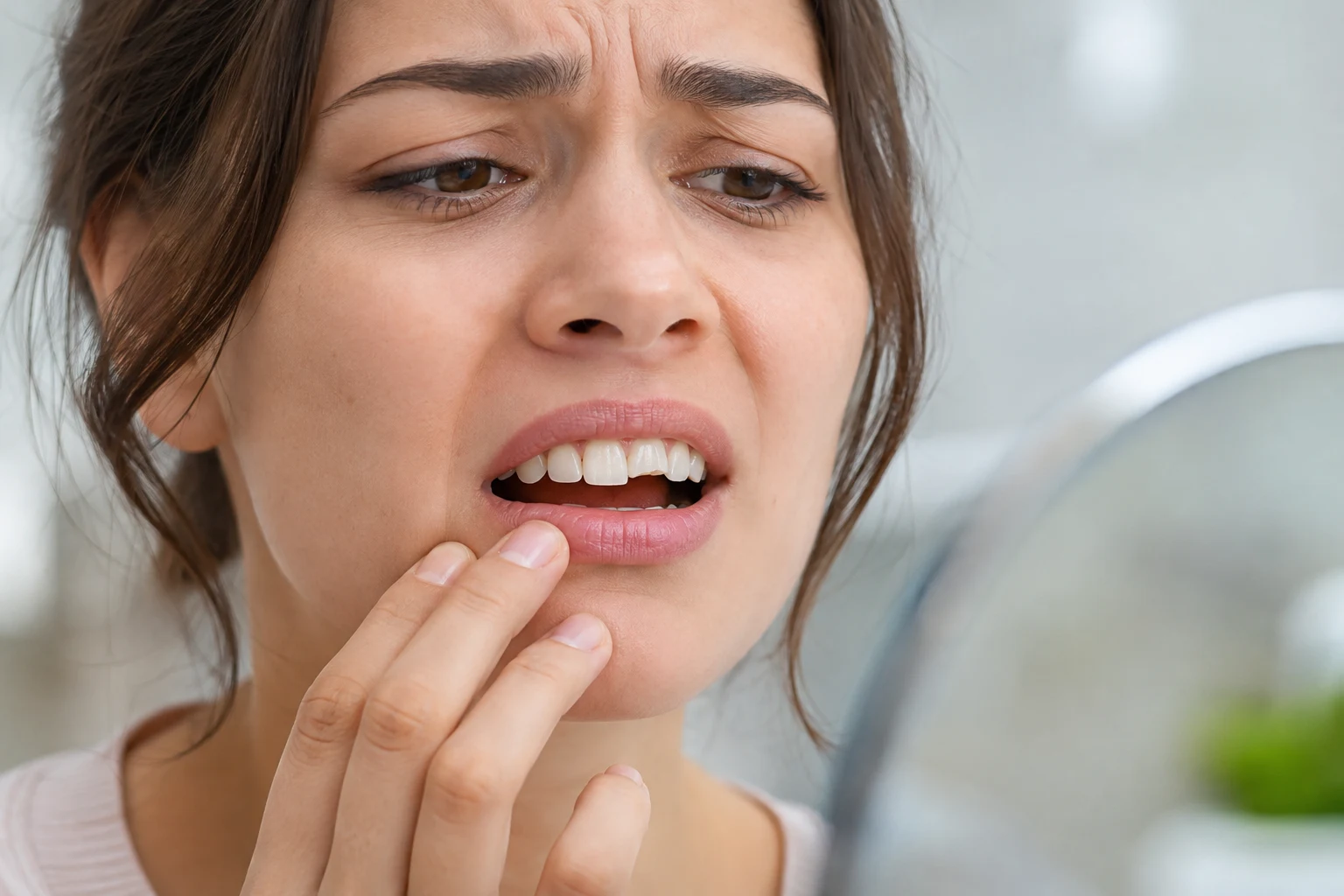


A chipped or broken tooth can happen in a second: biting something hard, a fall, a knock while playing sport. Sometimes the damage is a tiny nick on the edge of a front tooth. Other times a larger piece breaks away and leaves the tooth sharp, sensitive or sore.
A small chip with no pain is not usually an emergency, but it should still be checked. Severe pain, swelling, a large break or a loose tooth needs urgent dental care. Even when a tooth does not hurt, a chip or crack can reach further than you can see.
At Meliora Dental in Leeds, we can assess a damaged tooth and talk you through the options, based on how much has broken, what you are feeling and how much healthy tooth remains.
So what should you do right now, when is it an emergency and how do dentists repair the damage?
What Should You Do If You Chip or Break a Tooth?
Stay calm and take a few simple steps to protect the tooth until you can see a dentist.
Rinse Your Mouth Gently
Rinse with lukewarm water to clear away loose fragments and food. If the tooth is sensitive, avoid very hot or very cold water.
Keep Any Broken Pieces
If you can find the fragment, keep it in a clean container or in a little milk and bring it to your appointment. Your dentist can tell you whether it is of any use. Please do not try to glue it back on yourself.
Control Bleeding and Swelling
If your gum, lip or tongue is bleeding, press gently with clean gauze. A cold compress held against the cheek can ease swelling. If the bleeding is heavy or will not stop, get urgent medical help.
Cover Sharp Edges
A broken tooth can leave a rough edge that cuts your tongue or cheek. Dental wax, available from most pharmacies, can cover it for a short time. Avoid filing the tooth or attempting a repair at home.
Manage the Pain
Paracetamol or ibuprofen taken as directed on the packet can take the edge off discomfort. Ibuprofen is not suitable for everyone, so check with a pharmacist if you are unsure.
Go Easy on the Tooth
Stick to soft foods and chew on the other side. Hot, cold, sticky and very hard foods are best avoided while the tooth is sensitive.
Arrange a Dental Assessment
Contact your dental practice promptly, even if the damage looks minor. A dentist can tell whether the tooth needs smoothing, bonding, a filling, a crown or something more. NHS advice is the same: book an appointment soon after the tooth breaks, and do not go to your GP, who cannot provide dental treatment.
What If the Whole Tooth Is Knocked Out?
A tooth knocked out completely is a dental emergency, and speed matters. Contact a dentist straight away.
If it is an adult tooth, pick it up by the crown (the white part), not the root. If it is dirty, rinse it briefly in milk without scrubbing it. If you can, gently place it back in the socket and bite softly on gauze to hold it there. If that is not possible, keep it in milk and get to a dentist as soon as you can.
Do not put a baby tooth back in the socket.
When Should You See an Emergency Dentist for a Broken Tooth?
Not every chip is urgent, but some symptoms mean you should be seen quickly. Contact a dentist urgently if you have:
- Severe or constant toothache.
- A large break that exposes the inner part of the tooth.
- Strong sensitivity to temperature or pressure.
- A tooth that is loose or has moved after an injury.
- Swelling around the tooth or gum.
- A sharp edge that keeps cutting your tongue or cheek.
Meliora Dental offers emergency dental treatment and same day appointments, so call us as soon as you can. The earlier we see you, the more likely it is that treatment can stay simple. If we are closed, NHS 111 can direct you to urgent dental care.
Go to A&E or call 999 if the injury comes with a suspected broken jaw, heavy bleeding that will not stop, a head injury or confusion, difficulty breathing or swallowing, or swelling that spreads towards your eye or neck.
Without any pain, a visible crack or missing piece still deserves an assessment, because the true extent of the damage is not always obvious from the surface.
What Causes a Tooth to Chip or Break?
Teeth are tough, but they are not unbreakable. Knowing the usual causes can help you protect them.
Biting Hard Foods
Hard foods, ice and unpopped popcorn kernels can chip or fracture a tooth, especially one that is already weakened.
Tooth Decay
Decay eats away healthy tooth structure. As it progresses, the tooth can give way during ordinary chewing. If decay is behind the break, your dentist needs to assess how far it has spread before choosing how to restore the tooth.
Teeth Grinding and Clenching
Constant pressure from grinding can wear edges down and lead to small fractures or larger breaks. If you suspect you grind, it is worth reading about teeth grinding and what your dentist can do to protect your teeth.
Large Fillings and Older Restorations
A tooth with a big filling has less natural structure left to cope with everyday biting. That does not mean every filled tooth will break, but some are more vulnerable than others.
Accidents and Sports Injuries
Falls, collisions and knocks can chip, crack or loosen teeth. A properly fitted mouthguard for contact sports lowers the risk considerably.
What Types of Tooth Damage Are There?
Not all damage is the same, and the type decides the treatment. Your dentist may talk about:
- Craze lines: Fine hairline cracks in the enamel. They are very common and usually need no treatment.
- A chip: A small piece of enamel has broken off, often from an edge or corner.
- A broken cusp: The pointed part of a back tooth has broken away, often around an old filling.
- A cracked tooth: A crack runs from the biting surface towards the root. It can cause sharp pain, particularly when you release a bite rather than when you bite down.
- A split tooth: The crack has widened so the tooth is separating into parts.
- A break below the gum line: Much of the damage is out of sight, which makes the tooth harder to restore.
Cracks can be hard to spot, and some do not show clearly on an X ray. That is another reason to have even a painless chip looked at properly.
How Do Dentists Repair a Chipped or Broken Tooth?
Treatment depends on how much of the tooth has broken, whether the inner tissue is affected and how much healthy tooth remains. Your dentist will examine the tooth and may recommend dental X rays if they are needed to assess the damage or explain your symptoms.
Smoothing a Small Chip
If only a tiny amount of enamel has gone and the tooth is otherwise healthy, your dentist may be able to smooth and polish the rough edge. That can be all that is needed when the damage does not affect how the tooth looks or works.
Composite Bonding
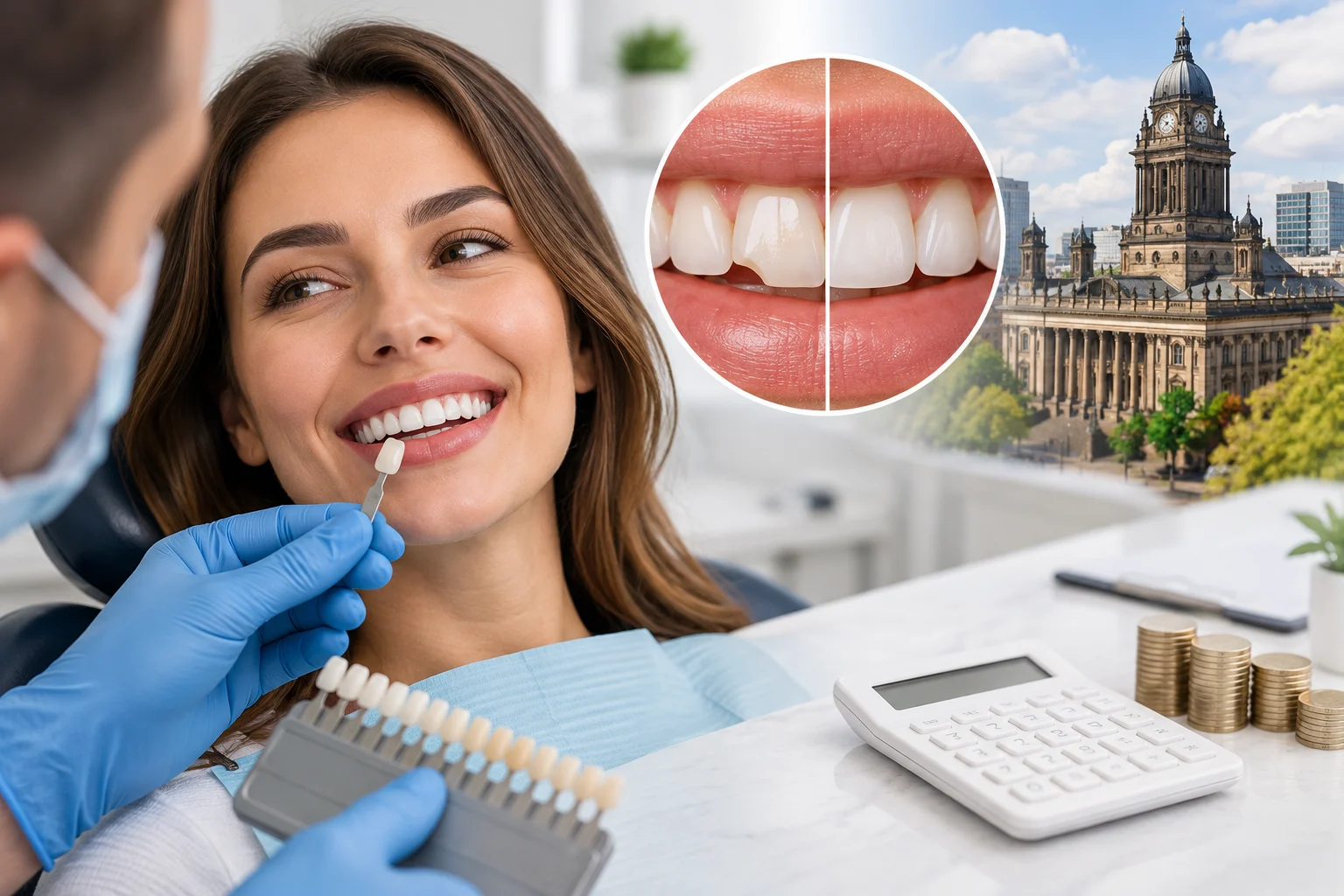
Composite bonding uses a resin matched to your tooth shade, built up and polished to rebuild the missing area. It suits small chips, uneven edges and some minor fractures, provided enough healthy tooth is left to hold it.
Your dentist chooses the shade, prepares the surface where necessary and shapes the composite so it blends with the tooth around it. Read more about composite bonding in Leeds at Meliora Dental. If you are considering it for a chipped front tooth, our guide to how long composite bonding lasts covers its expected lifespan and care.
A Tooth Coloured Filling
If a tooth has broken because of decay, or a bit more structure has been lost, a filling may be the better answer. Your dentist removes any decay and restores the shape of the tooth while keeping as much healthy structure as possible. Find out more about white fillings at Meliora Dental.
A Dental Crown
A badly damaged tooth may need a crown, which covers the visible part of the tooth to restore its shape, strength and support. Whether a crown is right depends on how much healthy tooth remains, where the damage is and the overall condition of the tooth. Our article on when you might need a dental crown explains what to expect.
Root Canal Treatment
If the break reaches the pulp inside the tooth and causes irreversible inflammation or infection, root canal treatment may be needed to remove the affected tissue, clean the canals and seal them. The tooth then usually needs a suitable restoration to protect what is left.
Tooth Extraction
Occasionally a tooth is too badly damaged to save, for example when the fracture runs well below the gum line or too little structure remains to support a restoration. Your dentist will explain whether the tooth can be saved before recommending anything. If a tooth does have to come out, it helps to know your options for replacing a missing tooth early on.
Can a Chipped Tooth Heal on Its Own?
No. Enamel cannot regrow, and a chipped or cracked tooth does not repair itself the way bone can.
A very small chip may cause no pain and need little more than smoothing, but the missing edge will not come back. Larger breaks may call for bonding, a filling, a crown or other treatment.
It is worth getting the tooth checked even if it feels normal, as an early look helps your dentist decide whether any treatment is needed at all.
Can a Broken Tooth Become Infected?
Yes, it can. If the break lets bacteria reach the inner tissue of the tooth, infection may follow, although many chipped teeth never become infected.
Warning signs include throbbing or persistent toothache, swelling, tenderness, a bad taste in the mouth or a raised temperature. If you notice any of these, seek an urgent dental assessment. A dental infection will not reliably clear without treatment.
Swelling that affects your face or neck, or any difficulty breathing or swallowing, needs emergency medical care.
How Can You Prevent Teeth from Chipping or Breaking?
Not every dental injury can be avoided, but a few habits lower the risk.
- Avoid chewing hard objects: Skip ice, pens and anything that is not food.
- Wear a mouthguard for contact sports: A properly fitted one protects against knocks to the face.
- Keep up good oral hygiene: Brush twice daily with fluoride toothpaste and clean between your teeth each day.
- Attend regular check ups: Your dentist can spot decay, worn surfaces and weak points before a tooth breaks.
- Address grinding: Ask what can be done if you clench or grind.
- Get weak teeth checked: If a tooth with a large filling feels fragile or develops a crack, do not wait.
What Happens During a Dental Examination for a Broken Tooth?
The first step is to understand what has happened and whether anything else is going on underneath. Your dentist may:
- Ask how the injury happened and when symptoms began.
- Examine the damaged tooth and the gums around it.
- Check for sensitivity, tenderness and changes in your bite.
- Look at whether decay or an older filling contributed to the break.
- Recommend dental X rays where they are clinically needed.
- Explain your treatment options and likely costs.
They will weigh the immediate damage against the long term health of the tooth. Where the tooth can be repaired, the plan focuses on keeping as much healthy natural tooth as possible. Where the damage is more extensive, you will hear the limits and the alternatives plainly.
What If Your Child Chips a Tooth?
The first steps are the same: rinse gently, keep any fragment, comfort them and arrange a dental check. A chipped baby tooth still needs looking at, because the damage can affect the nerve or the adult tooth developing beneath. If a baby tooth is knocked out, do not try to put it back, but do get your child seen. Contact us and we will advise on the best next step.
Chipped or Broken Tooth Treatment at Meliora Dental in Leeds
A chipped or broken tooth can affect how you eat, how comfortable you feel and how confident you are about your smile. Some chips look minor, but you only know how serious the damage is once it has been examined.
At Meliora Dental, we assess damaged teeth and discuss suitable treatment based on your oral health and circumstances. Depending on what we find, that could mean smoothing a small chip, composite bonding, a filling, a crown or another appropriate procedure.
We welcome patients from Roundhay, Chapel Allerton, Moortown, Meanwood and the surrounding areas of Leeds.
If you have damaged a tooth, contact Meliora Dental to talk through your symptoms and arrange an assessment. If you have severe pain or significant swelling, seek urgent dental care.
Frequently Asked Questions About Chipped or Broken Teeth
Should I see a dentist for a small chip in my tooth?
Yes, it is advisable. Your dentist can tell whether the chip only needs smoothing or whether bonding or another restoration is appropriate.
Is a broken tooth always painful?
No. A tooth can be chipped or cracked without causing immediate pain. The absence of discomfort does not rule out damage that needs treatment.
Can a dentist repair a broken front tooth?
Many broken front teeth can be repaired, depending on the extent of the damage. Options include composite bonding, a filling or a crown, while more severe fractures may need different treatment.
How quickly should I see a dentist after breaking a tooth?
Contact your dentist as soon as possible for advice. Severe pain, significant damage, swelling or a displaced tooth needs urgent assessment, and difficulty breathing or swallowing needs emergency medical care.
Can composite bonding repair a chipped tooth?
Composite bonding can repair certain chipped teeth by rebuilding the missing area with resin matched to your tooth shade. Whether it suits you depends on the size and position of the chip and the condition of the rest of the tooth.
What should I do if a piece of my tooth breaks off?
Rinse your mouth gently with lukewarm water, keep the fragment if you can, avoid chewing on that side and contact your dentist. Do not try to glue the fragment back yourself.
Can a broken tooth become infected if it does not hurt?
Yes. A broken tooth can develop complications even without immediate pain, so arrange an assessment to find out how far the damage goes and whether treatment is needed.
Can a cracked tooth be saved?
Often, yes, but it depends on how deep the crack runs. A crack confined to the crown of the tooth can often be restored, while one that reaches below the gum line or splits the root may mean the tooth cannot be saved. Your dentist will examine it before advising you.