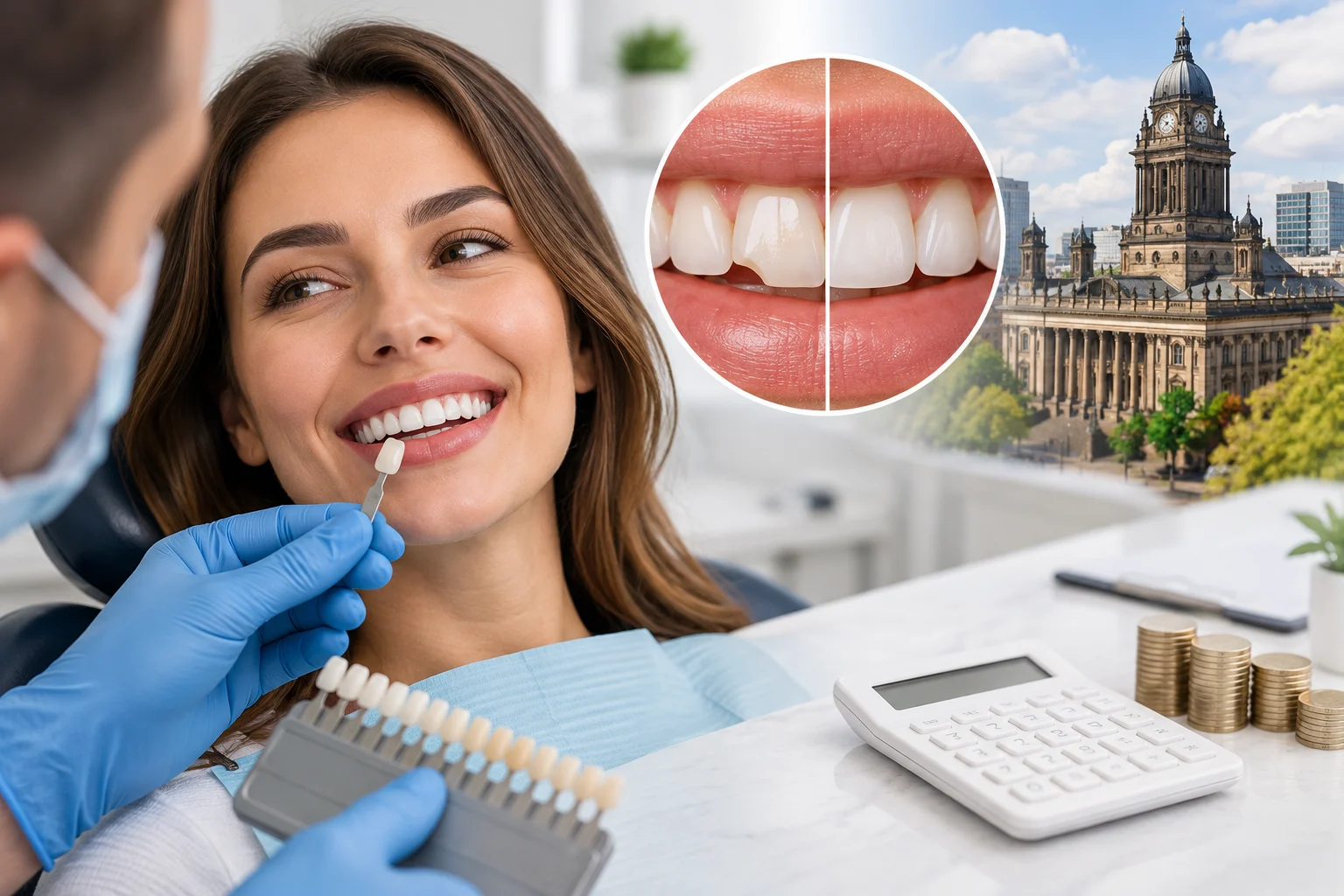


Composite bonding has become a popular option for people who want to improve the appearance of their teeth without extensive dental treatment. It can be used to reshape chipped or uneven teeth, improve tooth proportions, close small gaps, and enhance the overall appearance of a smile.
One of the first questions patients often ask is, "How much does composite bonding cost in Leeds?"
The answer depends on several factors, including how many teeth you want to treat, the amount of composite required, the complexity of the changes, and the overall condition of your teeth and gums.
At Meliora Dental, the current published price for composite bonding is from £250 per tooth. This is a guide price rather than a fixed cost for every patient, as your individual treatment requirements will determine the final fee.
So, what exactly does the cost include, what can make composite bonding more expensive, and how can you work out whether it is suitable for your smile?
How Much Is Composite Bonding at Meliora Dental?
Meliora Dental currently lists composite bonding from £250 per tooth.
The treatment is priced per tooth, so the total cost will depend largely on how many teeth require bonding. For example, bonding a single chipped tooth will generally involve a different treatment plan from reshaping several front teeth as part of a wider smile makeover.
It is important to remember that the published price is a starting point. During your consultation, your dentist will assess your teeth and discuss what you would like to achieve before explaining the treatment and associated costs.
You can also review the practice's dental fees and prices for the latest published information.
What Is Composite Bonding?
Composite bonding is a cosmetic dental treatment that uses a tooth-coloured composite resin to alter the appearance of a tooth.
The material can be carefully applied, shaped, and polished to improve the size, shape, contour, or appearance of individual teeth.
At Meliora Dental, composite bonding may be used for concerns such as:
- Small chips or worn edges
- Uneven tooth shapes
- Minor gaps between teeth
- Teeth that appear too short or narrow
- Certain areas of discolouration
- Minor cosmetic imperfections
- Improving tooth proportions as part of a smile makeover
The treatment is generally considered minimally invasive because it can often be completed without significant removal of natural tooth structure.
You can learn more about the treatment on the Meliora Dental composite bonding in Leeds page.
Why Does the Number of Teeth Affect the Cost?
One of the biggest factors affecting the cost of composite bonding is the number of teeth being treated.
If you only want to repair a small chip on one tooth, treatment may involve a single tooth. However, patients who want to change the appearance of several front teeth may require bonding across multiple teeth.
For instance, someone wanting to improve the symmetry of their front teeth may require treatment on several teeth rather than one isolated tooth.
This is why it is difficult to give an accurate total cost without first assessing your smile and understanding what you would like to change.
What Other Factors Can Affect the Price of Composite Bonding?
Although the number of teeth is an important consideration, it is not the only factor.
The Complexity of the Treatment
Simple bonding to repair a small chip may require less time and composite material than a more detailed reshaping procedure.
More complex cases may involve careful changes to tooth length, width, contour and symmetry.
The Amount of Composite Required
The quantity of composite resin needed can vary considerably between patients. Small repairs and subtle reshaping may require less material, while more extensive cosmetic changes may involve additional layers and detailed sculpting.
The Condition of Your Teeth
Composite bonding is generally intended for teeth that are suitable for cosmetic treatment. If you have active tooth decay, significant gum disease, or another underlying dental problem, this may need to be addressed before cosmetic treatment can proceed.
Maintaining healthy teeth and gums is an important part of planning any cosmetic dental treatment.
Your Overall Smile Goals
There is a difference between repairing one tooth and planning a broader smile transformation.
If you are considering changes to several teeth, your dentist may discuss how composite bonding fits into your wider treatment plan and whether another option may be more appropriate.
Is Composite Bonding Cheaper Than Veneers?
Cost is one reason patients may compare composite bonding with veneers, but price should not be the only consideration.
Composite bonding and porcelain veneers are different treatments with different materials, treatment processes, maintenance requirements and expected longevity.
Composite bonding can often be completed with minimal alteration to the natural tooth. Porcelain veneers, on the other hand, are custom-made restorations that are bonded to the front surface of the teeth.
The most suitable option depends on factors such as your oral health, the changes you want to make, the condition of your teeth and your longer-term expectations.
If you are considering alternatives, you can read more about porcelain veneers in Leeds before discussing your options with your dentist.
Can You Combine Composite Bonding With Teeth Whitening?
Yes, composite bonding can sometimes be combined with professional teeth whitening.
However, the order of treatment matters. Composite resin does not respond to whitening treatment in the same way as natural tooth enamel. If you want both treatments, whitening is generally carried out before composite bonding so that the bonding can be matched to the chosen tooth shade.
This can be particularly relevant if you are planning bonding on several visible front teeth.
If you are considering both treatments, you can explore Meliora Dental's teeth whitening treatment and discuss your desired result during your consultation.
Is Composite Bonding Worth the Cost?
Whether composite bonding represents good value depends on what you want to change and whether the treatment is suitable for your teeth.
For some patients, bonding can address several small cosmetic concerns without the need for more extensive treatment. It may be suitable for reshaping individual teeth, repairing minor chips or making subtle changes to tooth proportions.
However, composite bonding is not the right solution for every dental concern.
For example, significant tooth damage, major changes in tooth position, active gum disease or certain bite problems may require a different approach.
Your dentist should assess your oral health and explain the available options rather than recommending cosmetic treatment based on appearance alone.
How Long Does Composite Bonding Last?
Composite bonding does not last indefinitely, and its lifespan can vary between individuals.
Meliora Dental states that composite bonding has an expected longevity of around 2 to 7 years, although this can vary depending on factors such as oral hygiene, biting forces, habits, the teeth treated and the extent of the bonding.
Good oral hygiene and regular dental care can help maintain the bonded teeth.
It is also important to remember that composite can become stained or damaged over time, particularly if you regularly consume staining foods and drinks or have habits that place excessive force on the teeth.
How Can You Look After Composite Bonding?
Once you have had composite bonding, looking after your teeth remains important.
Practical steps include:
- Brush twice a day with fluoride toothpaste.
- Clean between your teeth every day.
- Attend regular dental examinations.
- Have professional hygiene treatment when recommended.
- Avoid biting hard objects with bonded teeth.
- Discuss teeth grinding or clenching with your dentist if this affects you.
- Limit frequent exposure to foods and drinks that may stain the composite.
- Follow any personalised aftercare advice provided by your dental team.
Regular dental hygiene treatment can also help you maintain good oral health around your bonded teeth.
Do You Need Healthy Teeth Before Composite Bonding?
Yes. Cosmetic dentistry should not be viewed as a substitute for treating underlying dental problems.
If you have tooth decay, active gum disease, significant inflammation, or another untreated oral health concern, your dentist may recommend addressing this before proceeding with composite bonding.
This is particularly important because healthy gums provide an important foundation for cosmetic dental treatment.
If you have concerns about your gums, you can learn more about gum disease treatment at Meliora Dental.
What Happens During a Composite Bonding Consultation?
Your appointment will usually begin with an assessment of your teeth, gums and overall oral health.
Your dentist will discuss what you would like to change and assess whether composite bonding can realistically achieve the result you are looking for.
Depending on your circumstances, the discussion may include:
- The number of teeth you want to treat
- The shape and proportions of your teeth
- Your existing tooth shade
- Any chips, gaps or uneven edges
- Your bite and how your teeth come together
- Your oral hygiene and gum health
- Whether whitening should be considered first
- Whether another treatment may be more suitable
- The expected cost of your proposed treatment
You may also discuss the shape and appearance you would like to achieve before treatment begins.
This consultation is an important part of understanding both the likely outcome and the total cost.
Can Composite Bonding Be Used for a Smile Makeover?
Composite bonding can be used on multiple teeth as part of a wider cosmetic treatment plan.
Rather than focusing on a single tooth, a smile makeover may involve considering the relationship between tooth shape, size, colour and symmetry.
The aim is not simply to make individual teeth look different. Your dentist needs to consider how the teeth work together as part of your smile.
If you are interested in a broader cosmetic treatment plan, you can explore Meliora Dental's cosmetic dentistry treatments to see the options available.
Composite Bonding Cost in Leeds: What Should You Budget For?
For 2026, Meliora Dental's published starting price for composite bonding is £250 per tooth.
However, it is important not to calculate your expected treatment cost simply by multiplying £250 by the number of teeth you are considering.
Your final treatment plan may depend on:
- The number of teeth requiring bonding
- The complexity of the reshaping
- The amount of composite required
- Your existing oral health
- Whether other treatment is needed beforehand
- Whether whitening or another cosmetic treatment is part of your plan
A consultation allows your dentist to assess these factors and provide a clearer understanding of the proposed treatment and cost.
Why Choose Meliora Dental for Composite Bonding in Leeds?
At Meliora Dental, composite bonding is provided as part of a wider approach to cosmetic and general dental care.
The practice is located at 313a Roundhay Road, Leeds LS8 4HT, and welcomes patients from Leeds and surrounding areas.
If you are considering composite bonding, the team can assess your smile, discuss your concerns and explain whether bonding is appropriate for your individual needs.
You can also explore the Meliora Dental smile gallery to see examples of the type of cosmetic dentistry provided by the practice.
Whether you are looking for a cosmetic dentist in Leeds, a dentist near Roundhay, or a dental practice near you, an individual consultation can help you understand your options before deciding on treatment.
If you are considering composite bonding, book a consultation with Meliora Dental to discuss your smile goals and receive an individual treatment plan.
Frequently Asked Questions About Composite Bonding Cost in Leeds
Q: How much does composite bonding cost in Leeds in 2026?
A: Meliora Dental currently lists composite bonding from £250 per tooth. The final cost depends on the number of teeth treated and the complexity of the required changes.
Q: Is composite bonding charged per tooth?
A: Yes. Meliora Dental's published fee is calculated per tooth, with the current guide price starting from £250 per tooth. Your dentist can confirm the expected cost after assessing your individual treatment needs.
Q: Is composite bonding cheaper than veneers?
A: Composite bonding can have a lower starting cost than porcelain veneers, but the treatments are different and may be suitable for different circumstances. Your dentist can explain the advantages, limitations and costs of each option.
Q: Can composite bonding fix chipped teeth?
A: Composite bonding can be used to repair and reshape certain chipped teeth. The suitability of treatment depends on the size and location of the chip and the overall condition of the tooth.
Q: How long does composite bonding last?
A: Meliora Dental states that composite bonding has a longevity of around 2 to 7 years. The actual lifespan can vary depending on factors such as oral hygiene, biting forces, habits and the teeth treated.
Q: Can I whiten my teeth after composite bonding?
A: Composite resin does not whiten in the same way as natural teeth. If you are considering both treatments, teeth whitening is generally planned before composite bonding so the resin can be matched to the chosen tooth shade.
Q: Does composite bonding require drilling?
A: Composite bonding is generally minimally invasive and usually requires little or no significant removal of natural tooth structure. The exact preparation depends on the tooth and the treatment being carried out.