

Dental implants are one option for replacing missing teeth and can be used to support individual crowns, bridges, or dentures. If you have been researching implant treatment, you may have come across several different types of dental implants and wondered how they differ.
So, what are the three main types of dental implants?
The three categories commonly discussed are endosteal implants, subperiosteal implants, and zygomatic implants. They differ mainly in where the implant is positioned and how it is supported within the mouth.
However, these options are not interchangeable. The most appropriate type depends on factors such as the number of missing teeth, the condition of your jawbone, your overall oral health, and your individual treatment requirements.
At Meliora Dental, we assess each patient's circumstances before discussing whether dental implants may be suitable.
What Are Dental Implants?
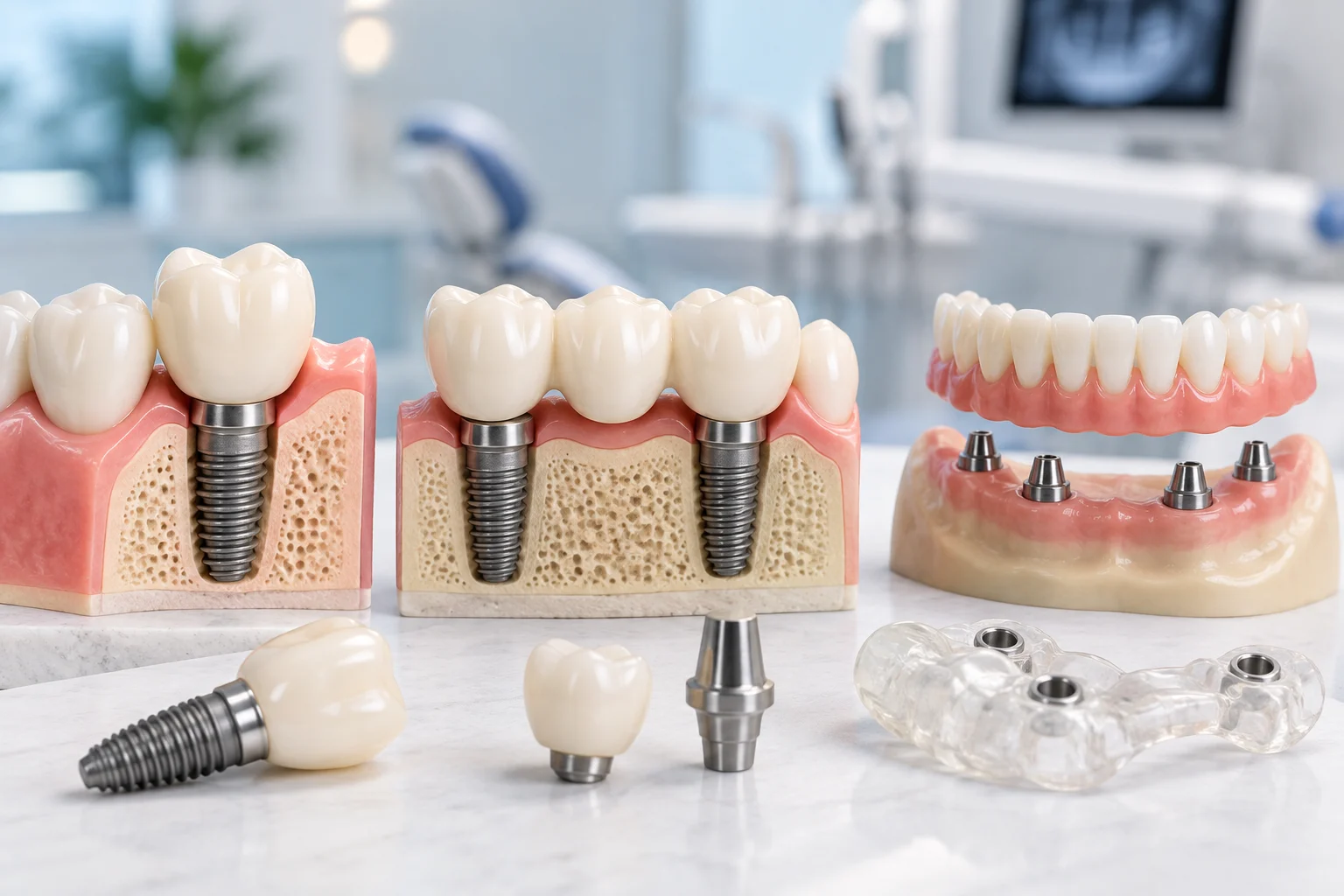
A dental implant is a structure placed into the jaw to provide support for a replacement tooth or teeth. It typically consists of an implant fixture, an abutment, and a dental restoration such as a crown.
Unlike a conventional removable denture, an implant-supported restoration is anchored to an implant rather than relying solely on suction, adhesives, or surrounding teeth for support.
Dental implants may be considered for people with:
- One missing tooth
- Several missing teeth
- Multiple missing teeth
- Complete tooth loss
- Teeth that require extraction and replacement
You can learn more about dental implants at Meliora Dental and the different treatment approaches that may be available.
What Are the 3 Main Types of Dental Implants?
The three main types are:
- Endosteal dental implants
- Subperiosteal dental implants
- Zygomatic dental implants
Although all three are designed to provide support for replacement teeth, their placement and indications are different.
1. Endosteal Dental Implants
Endosteal implants are the most commonly used type of dental implant.
The implant is placed directly into the jawbone. Once the implant has integrated with the surrounding bone, it can be used to support a dental crown, bridge, or other implant-supported restoration.
Endosteal implants are usually made from biocompatible materials such as titanium and are available in different shapes and designs.
They may be suitable for people who have sufficient healthy jawbone to support the implant.
What Are Endosteal Implants Used For?
Endosteal implants can be used in a range of situations, including:
- Replacing a single missing tooth
- Supporting several replacement teeth
- Supporting an implant bridge
- Supporting certain implant-retained dentures
- Replacing multiple missing teeth
The exact number and positioning of implants will depend on your individual treatment plan.
2. Subperiosteal Dental Implants
Subperiosteal implants are positioned differently from conventional endosteal implants.
Rather than being placed directly into the jawbone, a subperiosteal implant sits on or above the jawbone but underneath the gum tissue. The framework is designed to provide support for replacement teeth.
This type of implant has historically been considered for patients who do not have enough healthy jawbone for conventional implants and who may not be suitable for, or may not wish to undergo, bone augmentation procedures.
However, subperiosteal implants are much less commonly used today than endosteal implants because developments in implant dentistry have provided other treatment approaches for patients with reduced bone volume.
Your dentist or implant clinician would need to assess your individual circumstances before determining whether this type of treatment is appropriate.
3. Zygomatic Dental Implants
Zygomatic implants are a specialised type of implant used in certain cases where there is significant bone loss in the upper jaw.
Instead of being anchored primarily in the conventional jawbone areas used for standard implants, zygomatic implants are positioned into the zygomatic bone, which is part of the cheekbone.
Because this area generally provides a different type of bone support, zygomatic implants may be considered for selected patients with severe upper-jaw bone loss.
This is a more complex form of implant treatment and is not appropriate for everyone. It generally requires assessment and treatment planning by clinicians with appropriate training and experience in this area.
How Are the 3 Types of Dental Implants Different?
The main difference is where the implant receives its support.
Endosteal implants are placed directly into the jawbone and are the most commonly used type.
Subperiosteal implants sit on or above the jawbone underneath the gum tissue and are much less commonly used today.
Zygomatic implants are anchored in the zygomatic bone and may be considered for selected patients with significant bone loss in the upper jaw.
The type of implant is therefore not simply a matter of personal preference. Your anatomy and oral health play an important role in determining which treatment options can be considered.
Which Type of Dental Implant Is Most Common?
Endosteal implants are the most commonly used type of dental implant.
They can be used for a wide range of tooth replacement situations and are supported directly by the jawbone.
However, "most common" does not necessarily mean "suitable for everyone". A patient with significant bone loss, for example, may require a different approach.
Your dentist will consider your individual circumstances rather than choosing an implant type based solely on what is most commonly used.
How Does Your Dentist Decide Which Implant You Need?
Choosing an implant approach involves more than simply looking at the missing tooth.
Your dentist will usually consider factors such as:
- The number of missing teeth
- The position of the missing teeth
- The condition and volume of your jawbone
- The health of your gums
- Your bite
- Your general oral health
- Any existing dental restorations
- Your treatment goals
- Whether additional procedures may be required
Imaging may also be recommended to assess the available bone and the surrounding anatomical structures.
This detailed assessment helps your dental team develop a treatment plan that is appropriate for your individual circumstances.
Do You Need Enough Bone for Dental Implants?
Adequate bone volume and quality are important for conventional implant placement because the implant needs suitable support.
If bone has been lost following tooth loss, gum disease, trauma, or other causes, there may not initially be enough bone for conventional implant placement.
This does not automatically mean that dental implants are impossible.
Depending on your circumstances, your clinician may discuss options such as bone grafting or other implant techniques. In selected cases involving significant upper-jaw bone loss, specialised options such as zygomatic implants may also be considered.
An assessment is therefore important before assuming that you are or are not suitable for implant treatment.
Can Dental Implants Replace More Than One Tooth?
Yes. Dental implants can be used to replace more than one missing tooth.
Depending on the situation, implants may support individual crowns, a bridge, or an implant-supported denture.
The number of implants required does not necessarily correspond directly to the number of missing teeth. Your dentist will consider the location of the missing teeth, the available bone, your bite, and the type of restoration being planned.
If you have several missing teeth, you can also explore Meliora Dental's information about replacing missing teeth.
Are Dental Implants Suitable for Everyone?
Dental implants are not automatically suitable for every patient.
Your dentist will need to consider your oral health, the condition of your gums and jawbone, and other factors before recommending treatment.
Active gum disease, untreated decay, inadequate bone volume, certain medical considerations, and smoking may affect implant treatment planning.
This does not necessarily mean that treatment cannot be considered. Some issues may need to be addressed first to improve the health of the mouth and create more suitable conditions for implant treatment.
For patients with gum problems, appropriate gum disease treatment may be recommended before implant treatment is considered.
What Happens During a Dental Implant Consultation?
An implant consultation begins with an assessment of your oral health and your reasons for considering tooth replacement.
Your dentist may examine:
- Your remaining teeth
- Your gums
- The area where teeth are missing
- Your bite
- Available bone
- Existing dental restorations
Imaging may also be recommended to provide more detailed information about the jawbone and surrounding structures.
Your dentist can then discuss whether implants may be appropriate and explain the available treatment options.
If you require further treatment before implant placement, this can also form part of your personalised treatment plan.
What If You Are Nervous About Dental Implant Treatment?
It is understandable to have concerns about dental treatment, particularly when surgery is involved.
If you are anxious about dental procedures, speak openly with your dental team before treatment. Depending on your circumstances, sedation may be discussed as part of your care.
Meliora Dental provides dental sedation for suitable patients who may benefit from additional support with dental anxiety or certain procedures.
Your dentist can explain what options may be appropriate for you.
How Long Do Dental Implants Last?
Dental implants are designed to provide a long-term tooth replacement option, but they do require ongoing care and monitoring.
Their longevity can be affected by factors such as oral hygiene, gum health, smoking, biting forces, general health, and the condition of the surrounding tissues.
Good daily oral hygiene and regular dental examinations are therefore important after implant treatment.
An implant is not maintenance-free simply because it is artificial. The surrounding gums and bone still need to be looked after carefully.
How Can You Look After Dental Implants?
Looking after an implant-supported restoration involves maintaining good oral hygiene and attending recommended dental appointments.
You should:
- Brush your teeth twice a day with fluoride toothpaste.
- Clean carefully around the implant and restoration.
- Clean between your teeth using an appropriate interdental cleaning method.
- Attend regular dental examinations.
- Have professional hygiene treatment when recommended.
- Tell your dentist about any changes around the implant.
- Avoid smoking and tobacco products where possible.
- Seek advice if you notice bleeding, swelling, discomfort, or movement around the implant.
Regular professional care can help your dental team identify potential problems at an earlier stage.
What Are the Alternatives to Dental Implants?
Dental implants are one option for replacing missing teeth, but they are not the only one.
Depending on your circumstances, alternatives may include:
- Dental bridges
- Removable dentures
- Implant-supported dentures
- Leaving a missing tooth untreated in selected circumstances
The appropriate option depends on the location and number of missing teeth, your oral health, your preferences, and your individual circumstances.
Meliora Dental also provides crowns and bridges as part of its restorative dental care.
Why Choose Meliora Dental for Dental Implants in Leeds?
Choosing tooth replacement treatment is an individual decision, and understanding the available options is an important part of the process.
At Meliora Dental, our dental team in Leeds can assess your oral health, discuss your concerns and explain whether dental implants may be appropriate for you.
The practice provides dental care for patients from Leeds, Roundhay, Chapel Allerton, Moortown, Meanwood and surrounding areas.
Whether you are looking for information about replacing a single missing tooth or considering options for multiple missing teeth, an individual assessment can help you understand the available treatment approaches.
If you are considering dental implants, book a consultation with Meliora Dental to discuss your tooth replacement options.
Frequently Asked Questions About the Types of Dental Implants
Q: What are the three main types of dental implants?
A: The three types commonly discussed are endosteal, subperiosteal and zygomatic implants. They differ in where they are placed and how they are supported. Endosteal implants are the most commonly used type.
Q: Which type of dental implant is most common?
A: Endosteal implants are the most commonly used type. They are placed directly into the jawbone and can support crowns, bridges and certain implant-supported dentures.
Q: What are subperiosteal dental implants?
A: Subperiosteal implants sit on or above the jawbone underneath the gum tissue. They are much less commonly used today than endosteal implants and may be considered in selected situations involving reduced jawbone.
Q: What are zygomatic dental implants?
A: Zygomatic implants are specialised implants anchored in the zygomatic or cheekbone. They may be considered for selected patients with significant bone loss in the upper jaw.
Q: Can I have dental implants if I have bone loss?
A: It depends on the extent and location of the bone loss. Your dentist may discuss options such as bone grafting or alternative implant techniques after assessing your jawbone and overall oral health.
Q: Can dental implants replace several missing teeth?
A: Yes. Dental implants can support different types of restorations used to replace several missing teeth. The number of implants required depends on your individual treatment plan.
Q: Are dental implants permanent?
A: Dental implants are designed as a long-term tooth replacement option, but they are not maintenance-free and cannot be guaranteed to last indefinitely. Good oral hygiene, healthy gums and regular dental care are important for maintaining them.