

They can, and for plenty of people they do. A tooth that has been properly cleaned, sealed and protected can stay in your mouth for decades, long after the infection that sent you to the dentist has been forgotten. What nobody can honestly offer is a guarantee. How long a root canal lasts depends on the quality of the treatment, how much of the tooth is left, and how the tooth is looked after afterwards.
If you are facing treatment, or you had a root canal years ago and wonder how long it will hold, here is what actually decides the answer.
The short version: a root canal is not a short term fix. The tooth stays in place, so its lifespan is the lifespan of a natural tooth that has had its inside cleaned out. A good seal, a proper final restoration (usually a crown on a back tooth), healthy gums and regular check ups give it the best chance of lasting for life.
What happens inside the tooth during a root canal
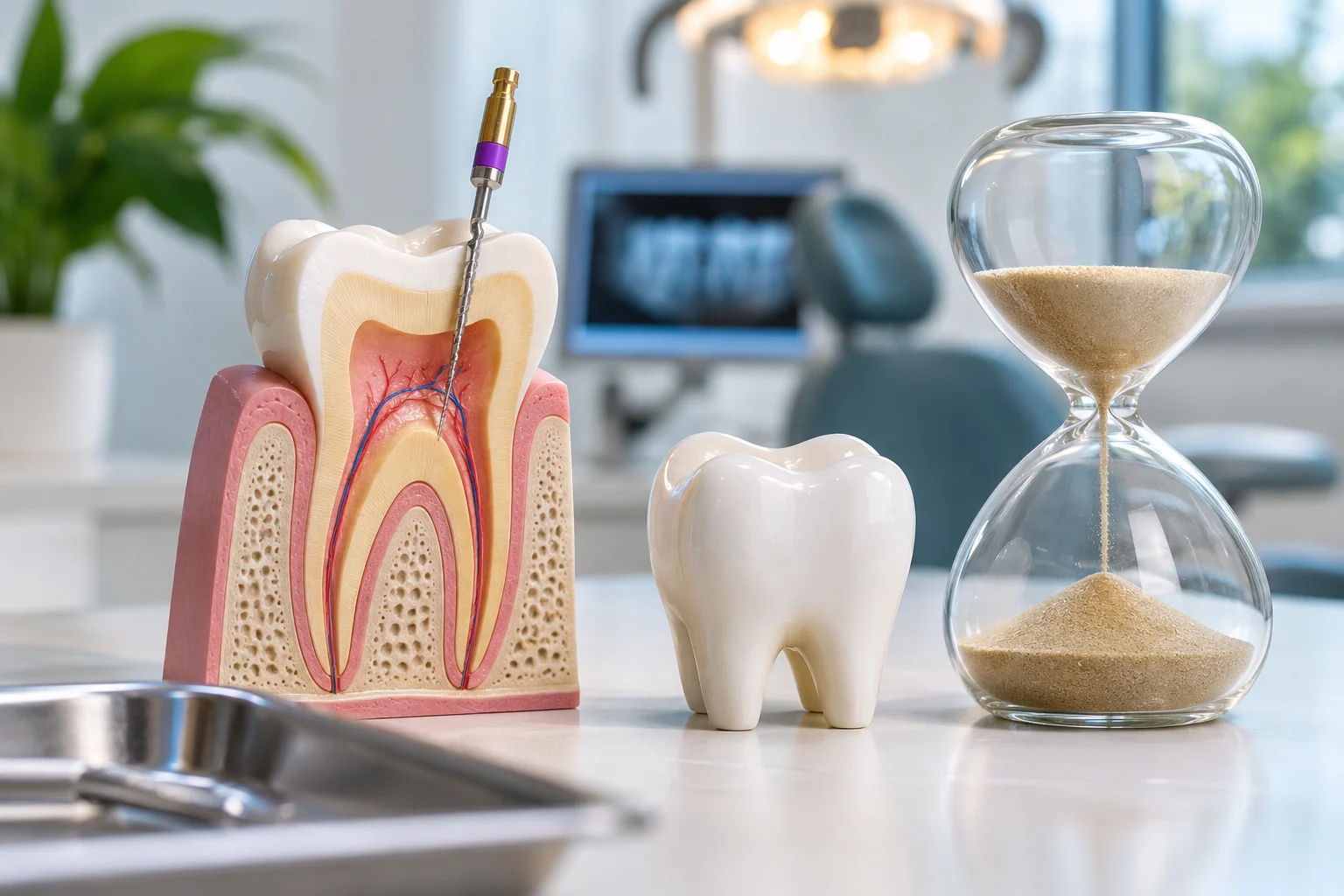
Root canal treatment removes infected or inflamed tissue (the pulp) from inside a tooth, cleans the narrow canals within the roots, and seals them so bacteria cannot get back in. The outer tooth stays where it is. You keep your own tooth, the one you chew with, rather than losing it and replacing it with something else.
A lot of people hear "dead tooth" at this point and worry. A root filled tooth is not rotting away. Once the pulp has been removed and the canals sealed, the tooth is held in the jaw by the ligament and bone around the root, and it carries on working like any other tooth. What it loses is the nerve supply, which is the part that was causing the pain.
What a large US study found about tooth survival
According to a study published in the Journal of Dental Research, which looked at records from more than 46,000 patients across 99 US dental practices, the median tooth survival time after a root canal was 11.1 years. That sounds modest if you were hoping for "a lifetime", so it is worth reading carefully.
A median means half of the teeth did better than that figure. The same study found a big gap depending on what happened next. Teeth that were restored with both a filling and a crown had a median survival of around 20 years. Teeth with only a filling or only a crown lasted around 11 years. Teeth with no restorative work afterwards lasted around 6.5 years.
These are US practice records covering all kinds of teeth in all kinds of condition, so they describe what happened in everyday care, not the best that is possible. But the pattern is hard to ignore: what happens after the root canal matters nearly as much as the root canal itself.
Why the crown or filling afterwards is half the story
A tooth that needed a root canal has usually already lost a lot of its structure, through deep decay, a large old filling or a crack. The treatment itself needs an opening into the tooth, which removes a bit more. What is left can be more likely to fracture under biting force, particularly on molars and premolars at the back of your mouth, which do most of the heavy chewing.
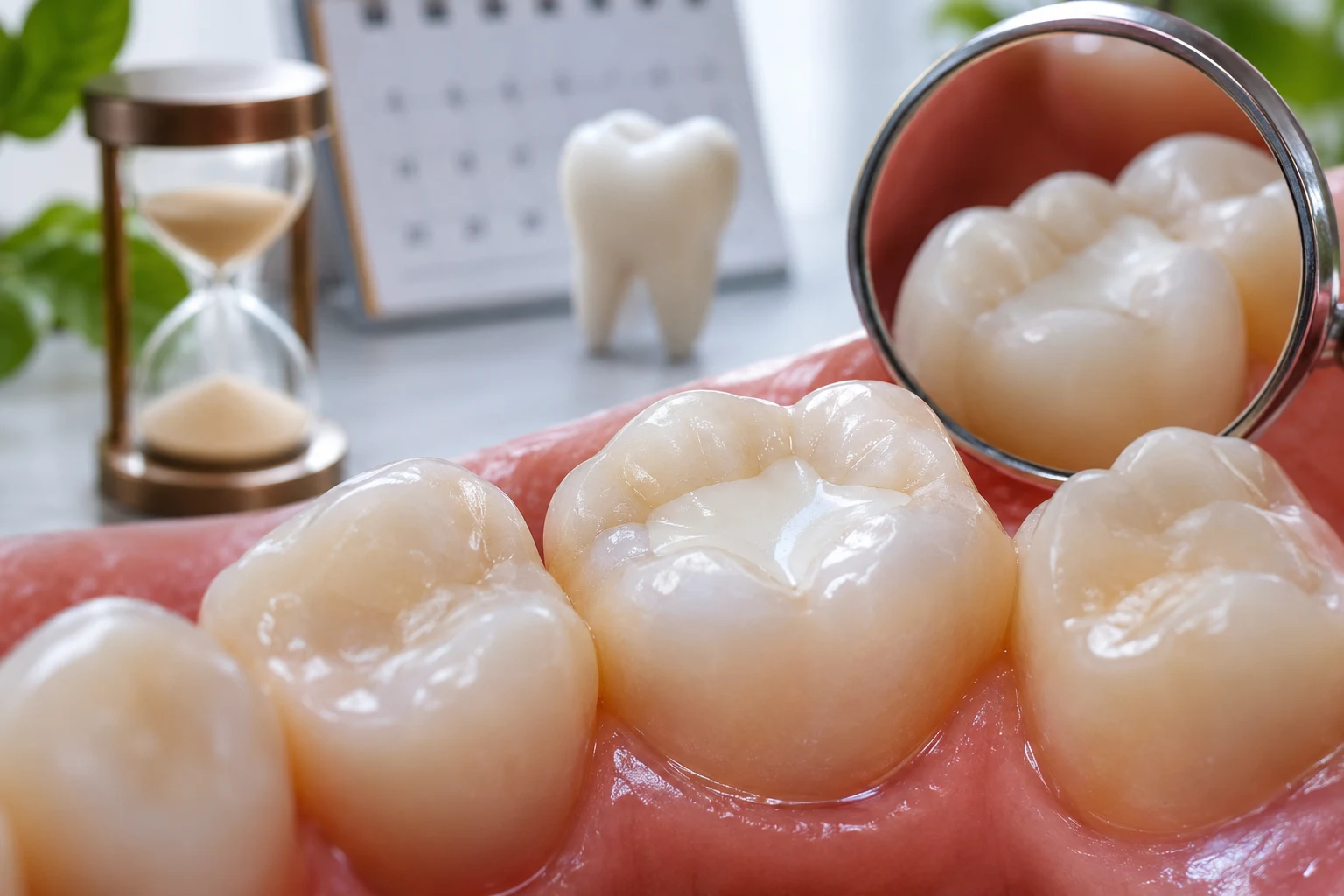
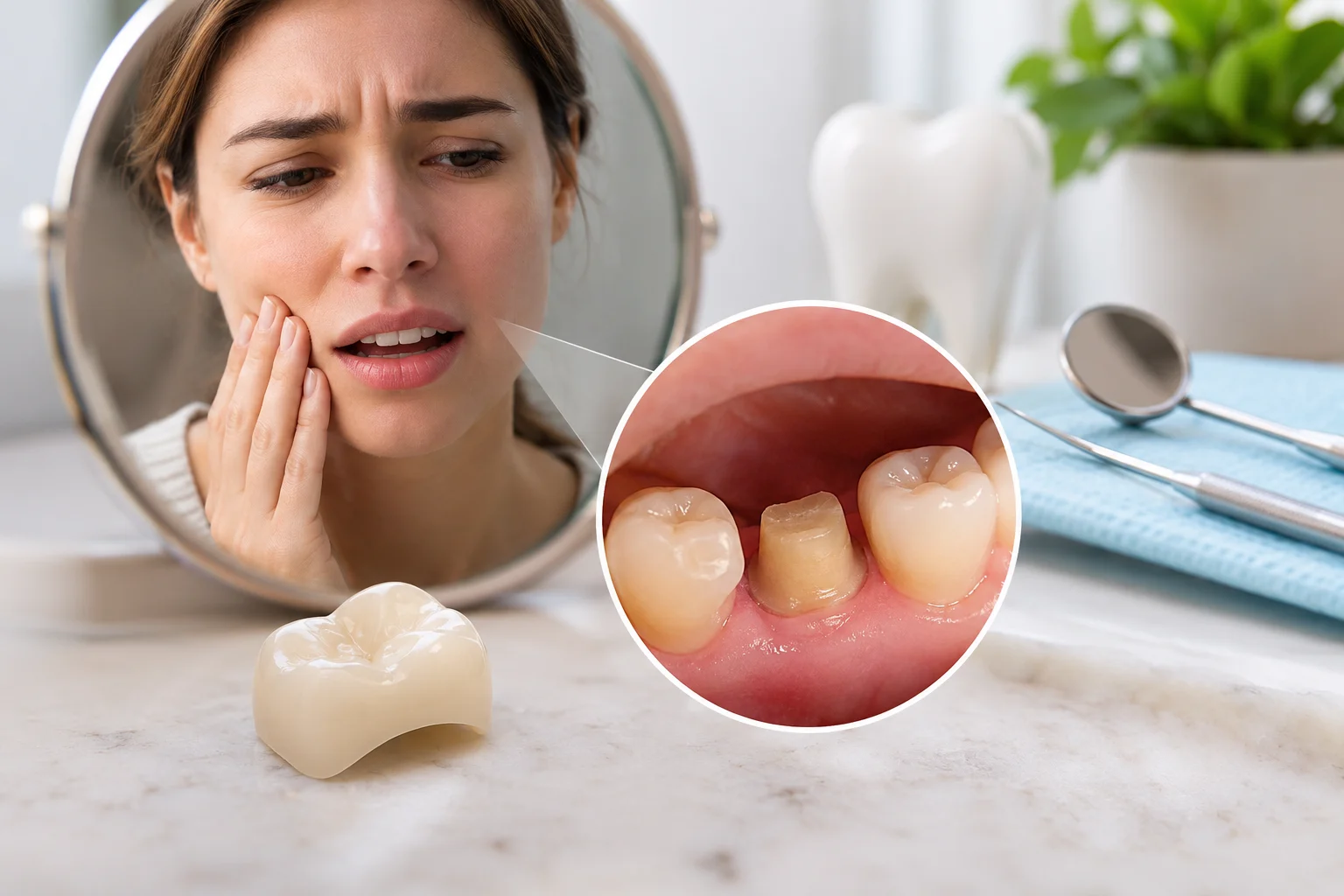
That is why a root canal is normally finished with a filling and, in many cases, a custom crown that sits over the tooth and holds it together. If you want to know how we decide, our guide on when a crown is the right choice covers the situations where one is recommended, including protecting a tooth after a root canal.
The other reason to complete the work promptly is the seal. A temporary filling is just that, temporary. Leaving it in place for months gives bacteria a chance to travel back down the canals, and then the whole treatment may have to be repeated.
Five things that shape a root canal's lifespan
How thorough the original treatment was
Tooth roots are not simple straight tubes. Some have extra or curved canals that are easy to miss, and any canal left uncleaned can keep infection alive. Careful cleaning, good isolation of the tooth during treatment and a well sealed filling all make a difference. At Meliora Dental we treat the tooth over two to three appointments and use a rubber dam, a thin sheet that isolates the tooth, to keep it clean and to lower the risk of infection spreading to neighbouring teeth. You can read how the treatment runs on our root canal treatment.
The condition of the tooth beforehand
A tooth with plenty of healthy structure left, and a clear picture on the X ray, has a better outlook than one that is badly broken down or cracked below the gum. Treating a problem early, before the infection has spread, improves the chances of saving the tooth.
Your gums and the bone around the root
A root canal deals with the inside of the tooth. It does nothing for the gums and bone that hold the tooth in place. If gum disease wears those supporting tissues away, the tooth can loosen and be lost, however good the root treatment was.
Grinding, clenching and hard foods
Repeated heavy force is hard on any tooth, and a root filled one has less margin for error. If you wake with a sore jaw or headaches, it is worth reading about grinding your teeth at night and what a dentist can do about it. A custom night guard is a simple way to protect an expensive repair. Chewing ice, pen lids and very hard sweets are worth avoiding on a treated tooth too.
Cleaning and check ups
Decay can start again at the edge of a filling or crown, and a tooth without a nerve will not warn you with pain the way it used to. That is a good argument for keeping up regular check ups, where small problems and X rays can pick up changes long before you would notice them.
When a root canal tooth starts giving trouble
Yes, a root canal can fail, though most do not. Sometimes bacteria find their way back in through a leaking seal or a crack. Sometimes a canal was missed, or a new problem appears years later.
Some soreness is normal for a few days after treatment, and we will tell you what to expect. What is not normal is pain that gets worse, comes back after settling, or turns up months or years later. Signs worth acting on include:
- Pain or tenderness when you bite or press on the tooth
- Swelling in the gum or face, or a small spot on the gum that keeps coming and going
- A tooth that darkens compared with its neighbours
- A bad taste or a persistent bad smell around the tooth
- A crown or filling that has come loose or broken
Ordinary tooth sensitivity to hot or cold has plenty of other causes, so it does not always point to a failing root canal. But if you are unsure, get it checked rather than waiting. Swelling, severe pain or a broken tooth is a reason to call us the same day. We can usually see you quickly, and you can find the details on our same day emergency appointments page.
Your options if the first root canal does not hold
It is not the end of the road for the tooth, at least not always. The options usually include:
- Retreatment. The tooth is reopened, the canals are cleaned again and resealed. Many teeth that had a first root canal go on to do well after a second.
- Root end surgery. In some cases a small procedure to clean the tip of the root can save the tooth, sometimes with a specialist involved.
- Extraction. If the tooth cannot be saved, it is removed and the gap can be replaced with an implant, bridge or denture. Taking a tooth out is a last resort, not a first move.
We will talk through which route makes sense for your tooth before anything is done, and tell you plainly what the realistic outlook is.
Habits that protect a root canal tooth
There is no secret to this. It comes down to a few habits, done consistently.
- Get the permanent filling or crown fitted promptly after treatment. Do not leave a temporary one in for months.
- Brush twice a day with a fluoride toothpaste and clean between your teeth every day.
- Keep your check up and hygiene appointments so we can look at the tooth and take X rays when needed.
- Wear a night guard if you grind or clench.
- Skip ice, pen lids and very hard sweets, and do not use the tooth to open packaging.
- Tell us if the tooth ever feels different, even if the change seems small.
None of that is dramatic, and that is rather the point. Most root canals that fail early do so because of a delayed crown, a missed problem or neglected gums, not bad luck.
Saving the tooth versus taking it out
In most cases, keeping your natural tooth is the better long term option. It keeps your bite balanced, it supports the bone, and it avoids the cost and extra appointments of replacing it. Our dentists will always look at saving a tooth first, and extraction is something we discuss only when the tooth has little chance of lasting. If you are nervous about treatment, we are a Dental Phobia Certified team and offer sedation for anxious patients.
Root canal care at Meliora Dental in Harehills, Leeds
If a tooth is giving you trouble, an early look usually means simpler treatment. At Meliora Dental in Harehills we offer same day emergency appointments, a calm approach for nervous patients, and careful treatment that finishes with the protection your tooth needs to last. If you are worried about an old root canal, we are just as happy to take a look.
Call us on 0113 249 0795 or book online to arrange an assessment at 313A Roundhay Road, Leeds LS8 4HT.
Root canal lifespan: your questions answered
How long does a root canal last?
There is no fixed number. In a large US study, teeth had a median survival of 11.1 years after a root canal, and around 20 years when they were restored with both a filling and a crown. Many last longer, and some last a lifetime. Good aftercare and regular check ups improve the odds.
Can a root canal tooth last 20 or 30 years?
It can. Because a median describes the middle of the group, about half of the teeth with a filling and crown in that study lasted beyond roughly 20 years. Individual results vary with the tooth, the gums and your habits.
Do I always need a crown after a root canal?
Not always, but often. Back teeth usually need one because of the biting force they take, and a tooth with a lot of structure missing needs the extra support. A front tooth with plenty of healthy tooth left may only need a filling. We will tell you which applies to you.
How do I know if my root canal is failing?
Look out for pain on biting, swelling, a recurring spot on the gum, a darkening tooth or a loose crown. Pain that returns after the tooth had settled is also a reason to get it checked. Some failing root canals cause no symptoms at all, which is one reason regular X rays matter.
Can a root canal be done twice?
Yes. Retreatment is a common way to save a tooth when the first treatment has not worked, and success rates can be good when the tooth still has enough structure. If a second attempt is not suitable, we will discuss the alternatives with you.